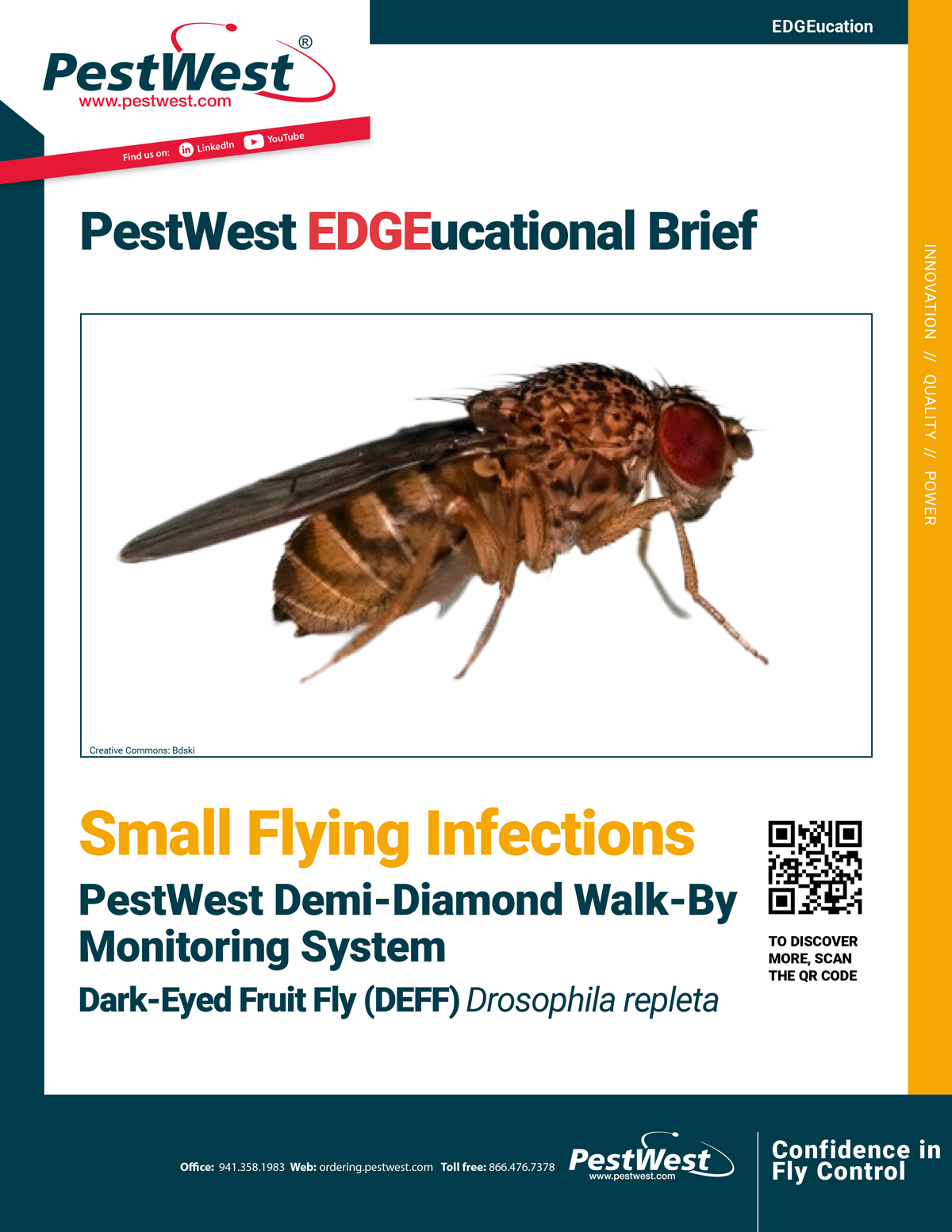
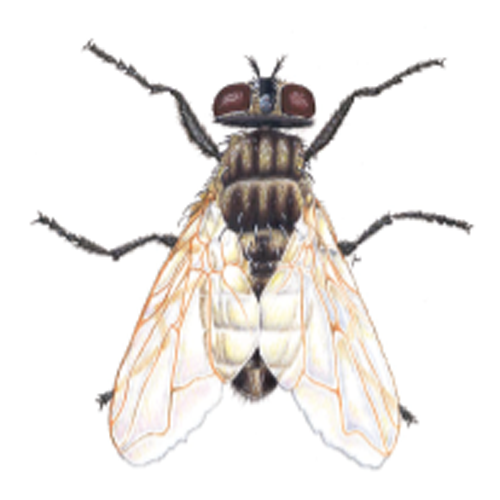
HFs are small to medium-sized (6-8 mm), with reddish compound eyes and a gray thorax featuring four dark stripes. Flight is rapid and erratic, with top speed reaching 8 km/h (5 mph). As a generalist, HF is oviparous and places eggs in moist (20% to 80%), fermenting and putrefactive organic matter.
HFs are significant mechanical vectors of numerous human pathogens. HF tarsal segments or “feet” and body can carry over 100 different pathogens resulting from interaction with heavily contaminated surfaces and materials. Diseases associated with HF include Cholera, Dysentery, and Salmonellosis. HF persistence requires strict hygiene and monitoring in and around sensitive food and healthcare facilities.
| Trait | Description |
| Size | 6-8 mm or 0.25 to 0.30 in |
| Color | Gray thorax with 4 dark stripes |
| Flight | Fast, erratic (up to 8 km/h or 5 mph) |
| Activity | Diurnal (day-active) |
| Season | Spring through fall, peaks in warm weather |
| Reproduction | Places eggs (oviparous) |
| Risk | Mechanical vector and nuisance |
While a both a significant nuisance and public health risk, HF contributes to the decomposition process by breaking down organic waste. HF presence is an indicator of poor hygienic conditions and can be used as a bio-monitoring tool for sanitation lapses in and around sensitive environments.
Every HF sighting in a sensitive area risks contamination, brand harm, and non-compliance.
Persistent, visible, and fast-reproduction, HFs pose multiple risks in commercial settings.
HF can land and take off in milliseconds due to highly advanced visual and neuromuscular systems. HF’s two large compound eyes process flicker at 200-250 Hz, allowing motion detection approximately 10 times faster than humans. This flicker fusion frequency, rate at which intermittent light appears continuous, matches the wingbeat and haltere oscillation frequencies, enabling real-time sensory-motor synchronization.
The wings (attached to the mesothorax) and the halteres (small, club-shaped gyroscopic organs located behind the wings on the metathorax) work together to sense body rotations and stabilize flight. High-frequency integration of vision, wing motion, and haltere feedback empowers remarkably fast and precise evasive maneuvers. Notably, House fly (Musca domestica) serves as the model species in 3rd-party efficacy studies for PestWest flying insect management systems.
"*" indicates required fields
Mon - Fri : 8 AM - 5 PM | EST